
Last updated November 16, 2026
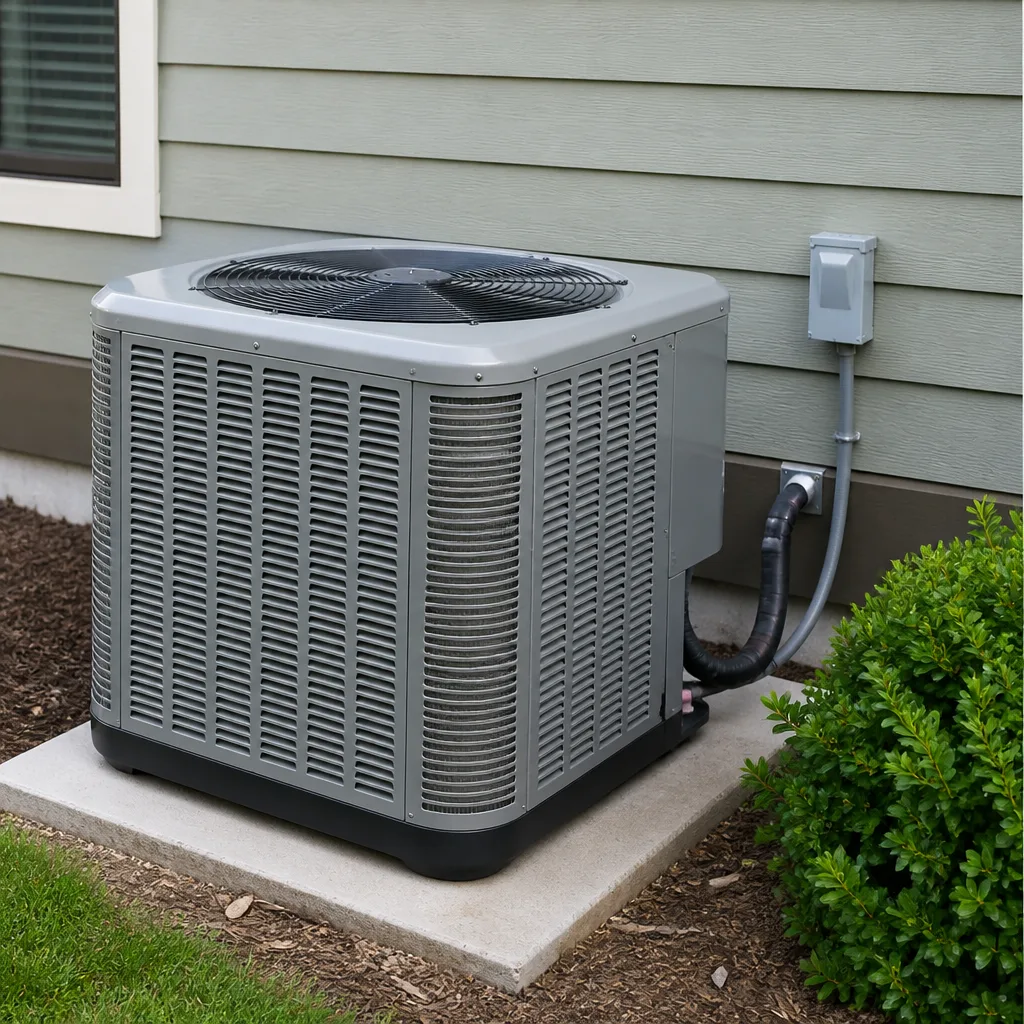 AC repair
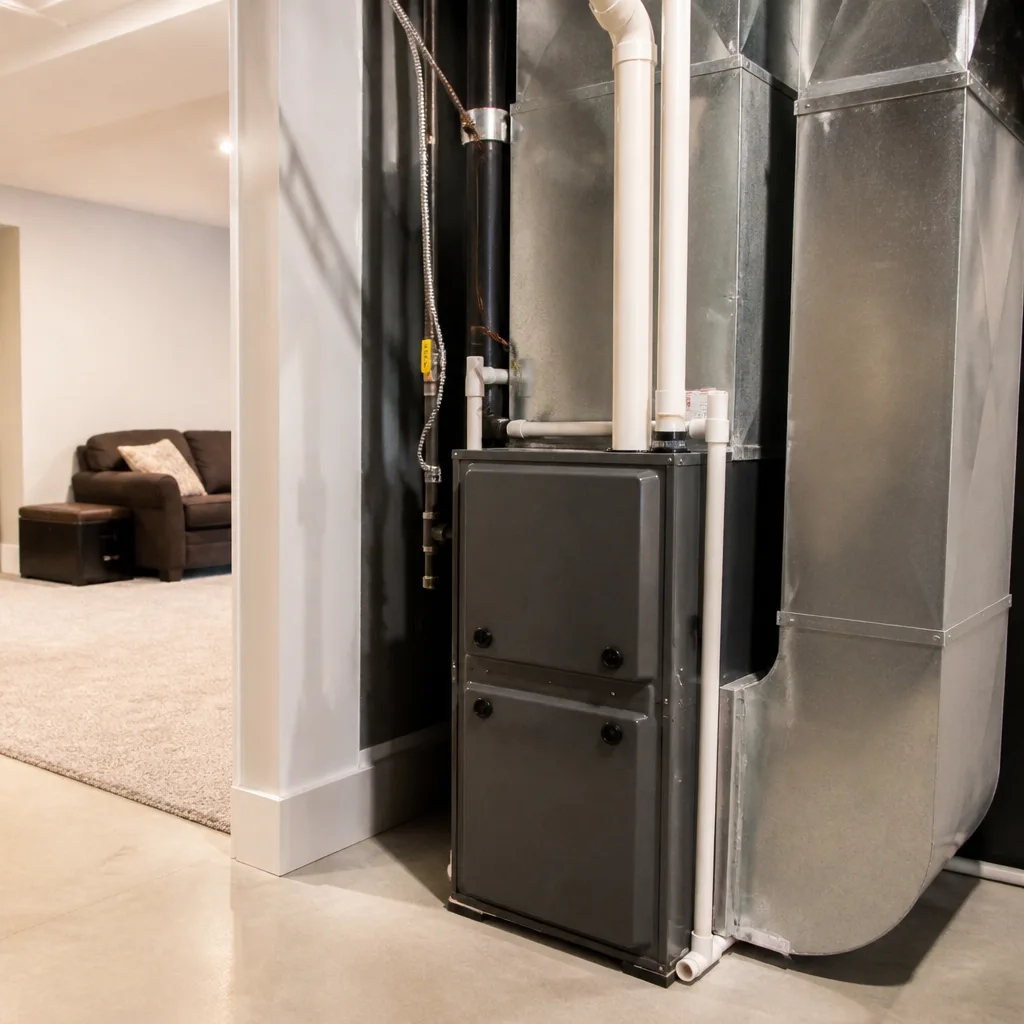 Furnace & heating
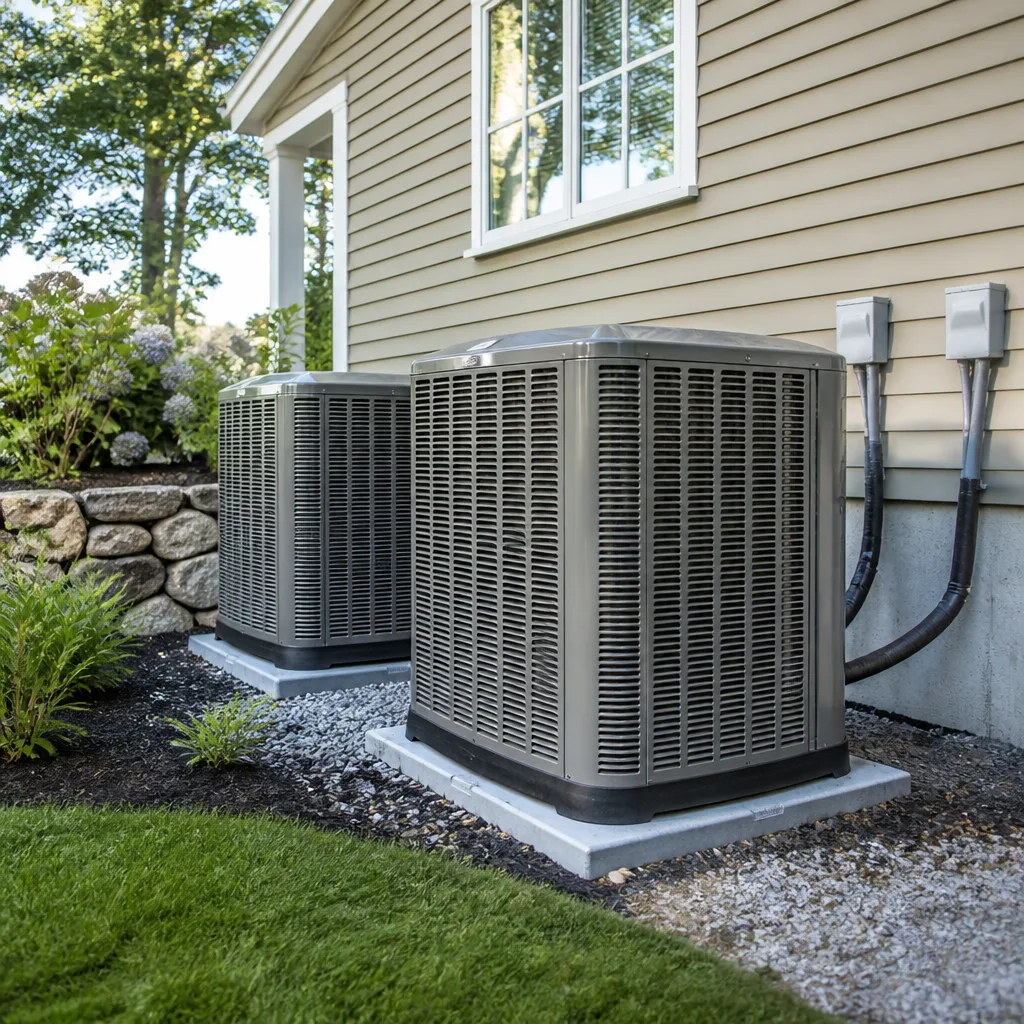 Heat pumps
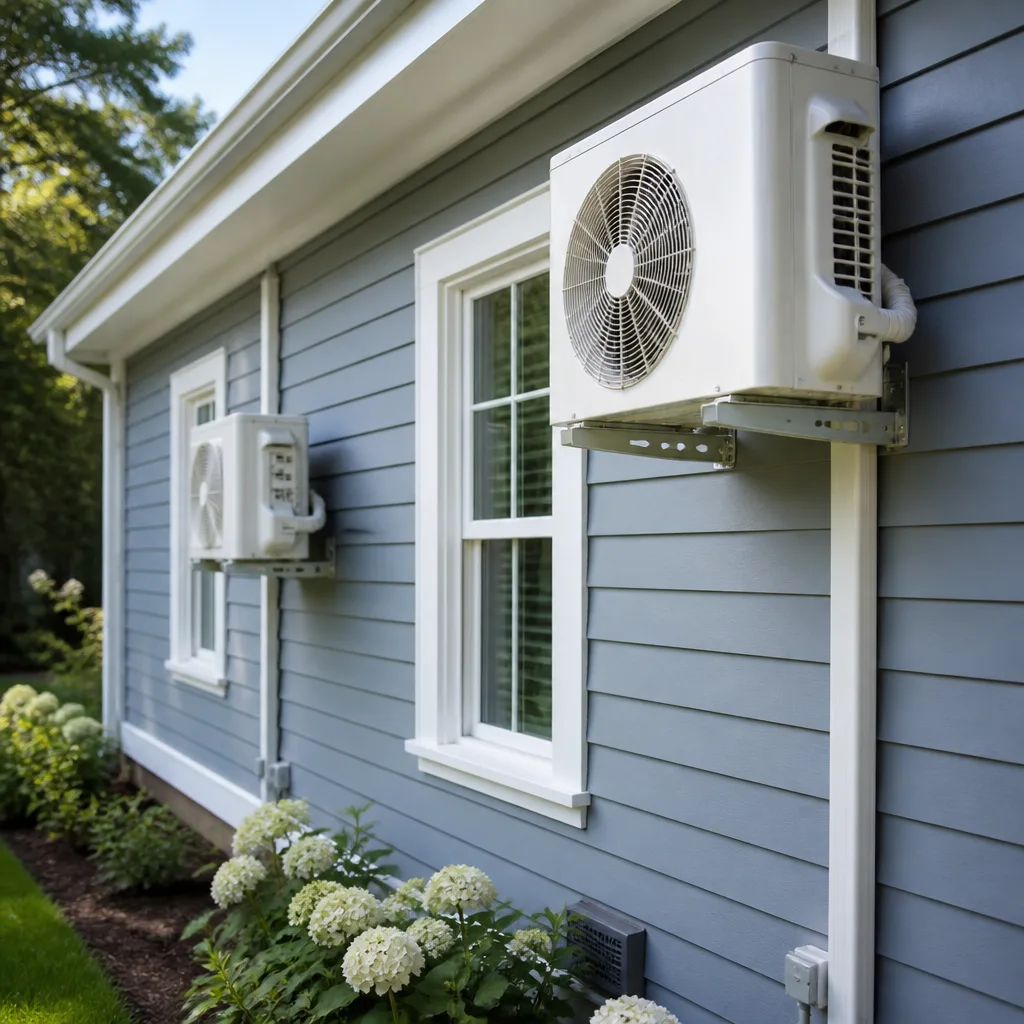 Ductless mini splits
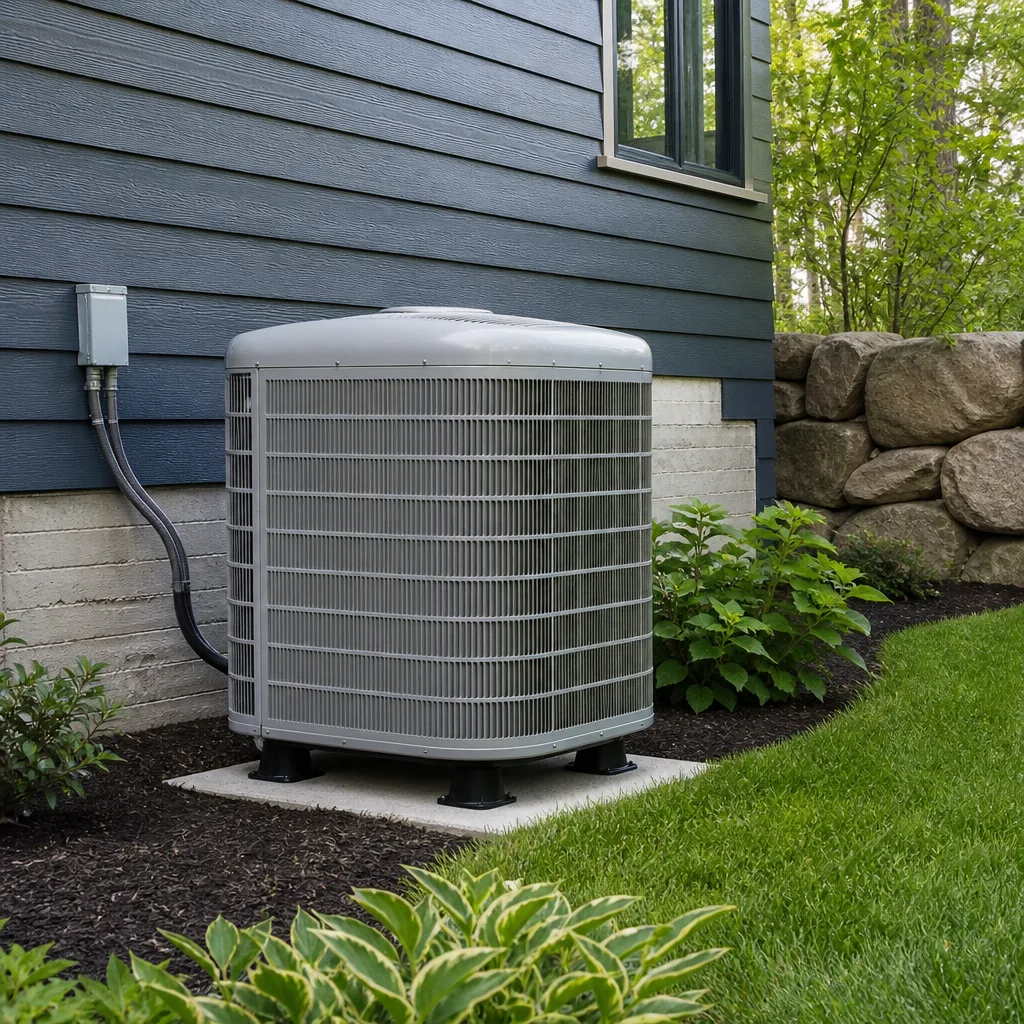 Carrier
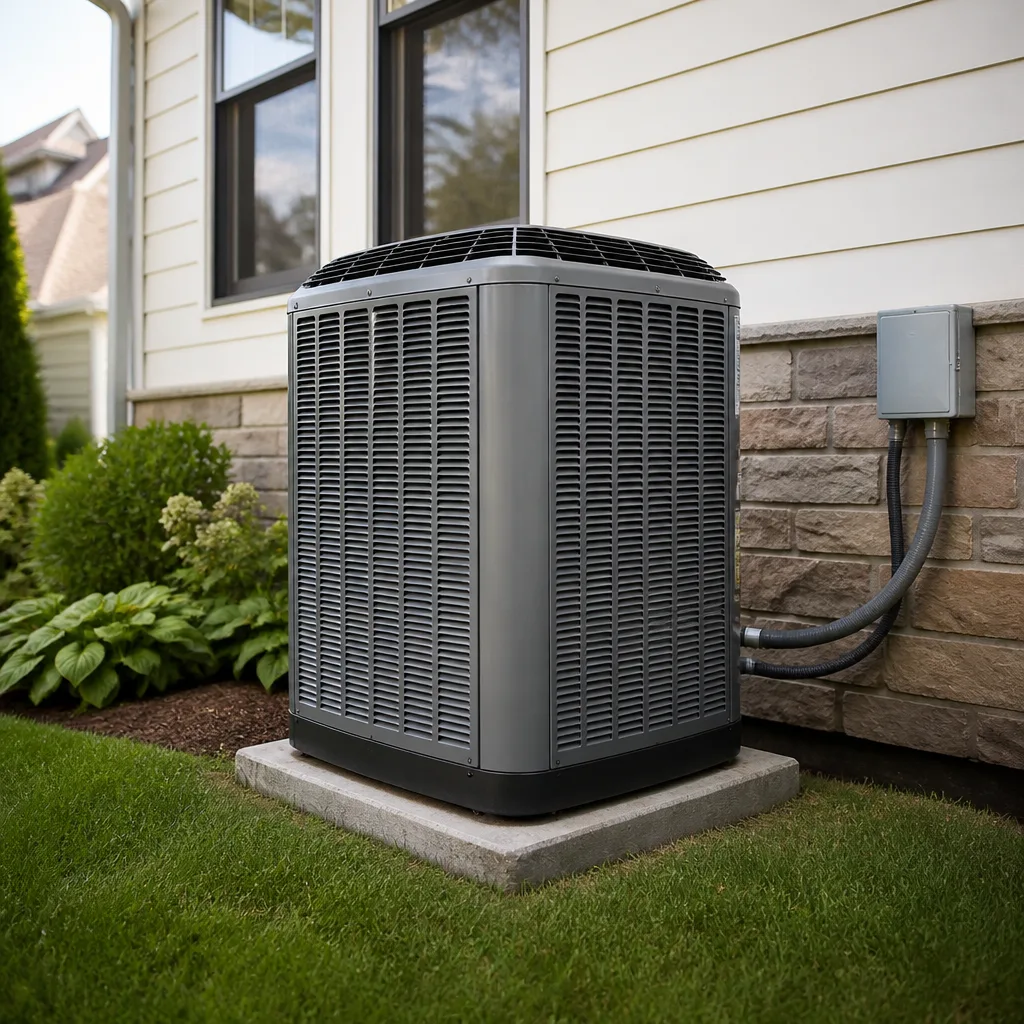 Trane
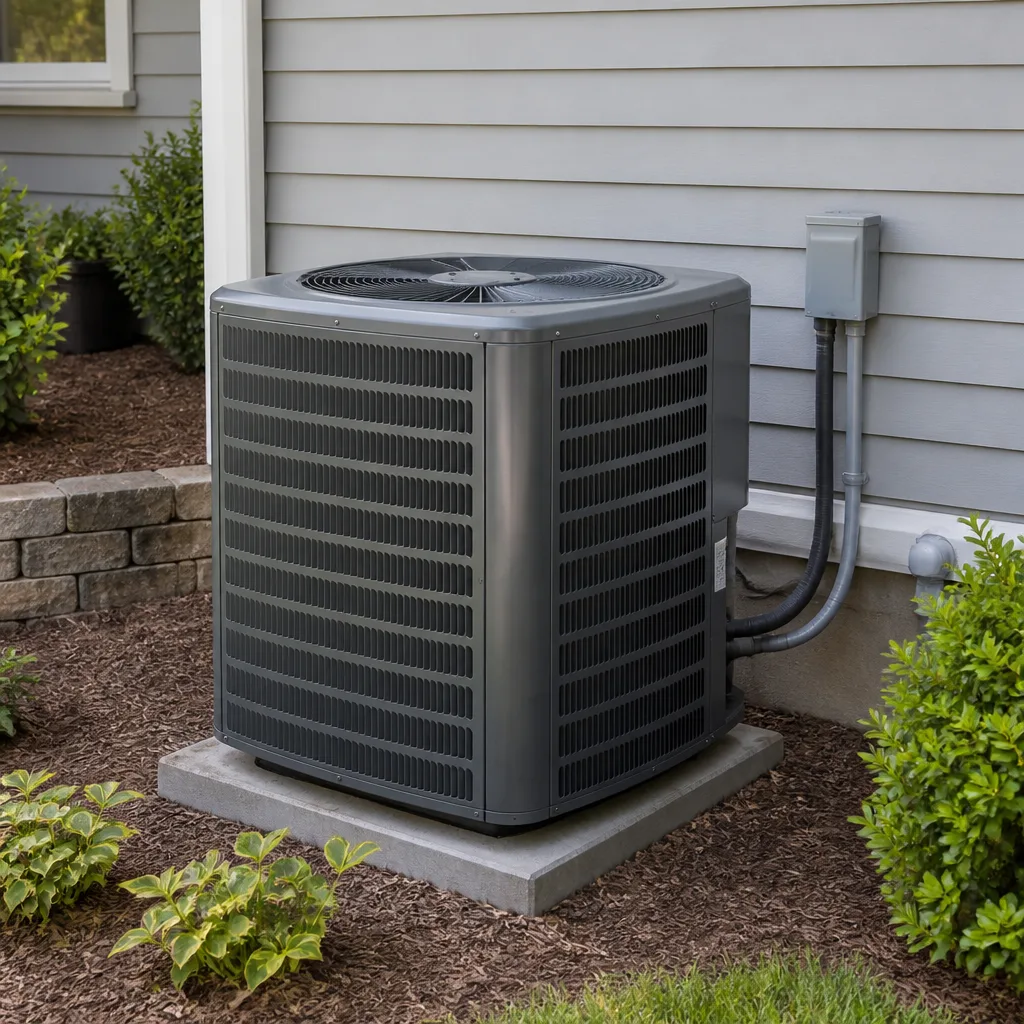 Goodman
Seasonal tune-up and full diagnostic on your Carrier, Trane, or Goodman system - readings shown to you before any repair is proposed
Diagnosis first, numbers second - you approve the repair price before a single part goes in.
Get your free estimateDIY vs Professional HVAC: The Riverview Homeowner’s Decision Guide
Replacing your own capacitor is legal, well documented online, and costs about fifteen dollars in parts. Adding refrigerant to that same system yourself is a federal violation that requires EPA Section 608 certification, and the fines attached to it are real. Most homeowners in Riverview don’t know where that line falls, so they treat every HVAC repair the same way: either all-DIY or all-hands-off. Neither approach is correct. Some tasks are genuinely safe and smart to do yourself. Others expose you to federal law, void your warranty, complicate your insurance, or put you in front of a live electrical circuit. This guide walks the line task by task so you know what’s yours to handle and what has to go to someone qualified.
Quick Answer
You can safely change filters, clear a condensate drain, and rinse a condenser coil in Riverview. You cannot legally handle refrigerant, and you shouldn’t open electrical panels or touch anything energized inside the air handler. Everything else sits in a gray zone where warranty terms, Florida homeowner rules, and insurance inspections matter more than skill. For anything beyond the three safe maintenance tasks, a professional is the smarter call.
Styles & brands we work with
- AC repair
- Furnace & heating
- Heat pumps
- Ductless mini splits
- Carrier
- Trane
- Goodman
Table of Contents
- The Task-by-Task Matrix: What’s Legal, What Isn’t
- Refrigerant and EPA Section 608: This Is Law, Not Advice
- DIY Electrical and Florida’s Homeowner Exemption
- How DIY Repair Affects Your 4-Point Inspection
- The Real Limits of Safe DIY Maintenance
- Warranty Voiding: The Rule Most Homeowners Miss
- When YouTube Helps and When It Costs You Money
- The Misdiagnosis Problem
The Task-by-Task Matrix: What’s Legal, What Isn’t
Most HVAC guides either tell you to call a pro for everything or hand you a wrench and wish you luck. Neither is honest. Here’s how the tasks actually break down for a typical Riverview home system.
Legal and safe for most homeowners
- Changing the air filter (monthly during heavy AC season)
- Rinsing off the outdoor condenser coil with a garden hose
- Flushing the condensate drain line with vinegar or warm water
- Checking and resetting a tripped breaker at the panel
- Straightening condenser fins with a fin comb
- Cleaning debris (leaves, grass) from around the outdoor unit
Requires a licensed technician
- Handling, recovering, or charging refrigerant in any form
- Diagnosing and replacing a compressor
- Working inside the air handler cabinet
- Electrical troubleshooting beyond a breaker reset
- Gas line work on a furnace (very rare in Riverview, but worth noting)
- Any repair that requires evacuating the system
Technically legal but risky
- Replacing a capacitor (safe if the power is off at the disconnect, dangerous if not)
- Replacing a contactor or relay
- Replacing a blower motor (mechanically simple, but moving 240V wiring)
- Swapping a thermostat (usually fine, but wiring varies)
When you look at this breakdown, the honest answer is that a homeowner can handle the first group and should leave the third group to someone with training. The second group isn’t a suggestion; it’s a requirement.
Refrigerant and EPA Section 608: This Is Law, Not Advice
Under EPA Section 608 of the Clean Air Act, only certified technicians can buy, handle, or charge refrigerant. That includes R-410A, R-22, and every blend used in residential air conditioning. There is no homeowner exception, no “small quantity” exemption, and no DIY workaround. It’s a federal statute, and the fines attached to violations are significant enough that no homeowner should test them.
Why does this rule exist? Refrigerant released into the atmosphere damages the ozone layer and contributes to climate change. Section 608 exists to keep that in check. Because of it, all refrigerant work must go through a certified professional.
Why this matters for a Riverview system
Riverview’s cooling season is long and demanding. Systems run hard for most of the year, and refrigerant is typically the first thing to leak when a system ages. That means refrigerant work comes up more often here than in cooler climates, and homeowners searching for shortcuts find plenty of them online. Those videos and forum posts usually leave out the certification requirement, and the parts retailers that sell a recharge kit quietly skip the legal part too.
If your system is low on refrigerant, it has a leak. Refrigerant doesn’t wear out; it escapes. Adding more without finding and fixing the leak is temporary at best and often causes further compressor damage. That’s a diagnostic and repair job, and it needs to go to a professional.
Our AC repair in Riverview service is built around that exact scenario: diagnose the leak, fix it properly, recharge to spec, and document everything.
DIY Electrical and Florida’s Homeowner Exemption
Florida allows a homeowner to perform electrical work on their own owner-occupied residence in some cases, without a licensed electrician. The rules are narrow: the home must be your primary residence, it must not be offered for sale or rent, and the work still has to meet adopted electrical codes and be inspected where the local authority requires it. Let me say that again – and still be inspected. “You can do it” doesn’t mean “no one checks.”
That said, HVAC electrical work is complicated by one factor most of us don’t want to think about: high voltage runs through the system even after you flip the breaker in the house panel. The disconnect on the outdoor condenser is a separate switch, and there’s a capacitor (sometimes more than one) that holds a charge even after power is off. That’s the specific reason we don’t hand out step-by-step capacitor replacement instructions. If the power isn’t fully isolated and the capacitor isn’t discharged, it’s a genuinely dangerous situation, and no video substitutes for the habit of doing it safely.
What the homeowner exemption doesn’t cover
- Work that violates manufacturer warranty terms (more on this below)
- Work your insurer later has to certify for coverage purposes
- Anything requiring EPA 608 certification (refrigerant)
- Anything requiring a mechanical permit or inspection
The Riverview housing stock includes a lot of homes built during the 2000s and 2010s when subdivisions like Summerfield and Boyette Springs were filling in. These systems use standard residential setups, but they’re now aging into the years when electrical components fail. That’s exactly when the exemptions get murky and homeowners realize asking a licensed professional is easier than reading statutes.
How DIY Repair Affects Your 4-Point Inspection
If you’re insuring a Riverview home older than a certain age (often 30 years old for many carriers, sometimes more recently), the insurer likely requires a 4-point inspection covering the roof, electrical, plumbing, and HVAC. That inspection note documents the condition and installation of your heating and cooling system, and insurance carriers read it carefully.
Here’s the part most homeowners miss: a system that’s been visibly modified by an unlicensed person can raise flags during the inspection, and any coverage dispute after a fire or water event is much harder to win when the equipment shows undocumented DIY work. Insurers aren’t looking for reasons to deny claims, but they do ask whether the work was done correctly. If it can’t be documented, the claim can be reviewed with more skepticism than it deserves.
That doesn’t mean you need to call a pro for a filter change. It means that anything affecting the power, refrigerant, or gas side of your system should be documented by a professional. If the inspector asks “who installed this compressor?” a receipt or a service record is the answer they want.
If you’re buying or selling a home in Riverview and a 4-point is on the horizon, a recent professional service record on file is worth the call. Our AC installation and service documentation is designed to make that record clean.
The Real Limits of Safe DIY Maintenance
Let’s be clear about what safe DIY maintenance means in a Riverview home, because this is where homeowners either do genuinely useful work or accidentally cause problems.
Filters
Change them. Every 30 to 60 days during heavy cooling season, more often if you have pets. A clogged filter is the single most common reason a system runs inefficiently, and it’s fully DIY. Buy a 2-pack, keep them next to the return, replace on the first of the month. That’s the entire job.
Condensate drain
The condensate line removes water the system pulls out of the air. In Riverview it runs constantly during summer. The drain line exits near the air handler, and a slow flush with a cup of vinegar or warm water every 2 to 3 months keeps it clear. If you see standing water in the drain pan or a drain pan full of water, the line is blocked. Stop here and call.
Outdoor coil
Rinse the outdoor condenser coil with a garden hose, no pressure washer. Do this when the system is off and cool. Remove any leaves or grass clippings trapped against the fins. This is safe and useful. Rinsing won’t fix a dirty indoor coil though, and that’s the coil that matters most for efficiency. Cleaning an indoor coil requires opening the air handler and working around electrical components.
What stays off the DIY list
- Cleaning the indoor evaporator coil (requires opening the cabinet)
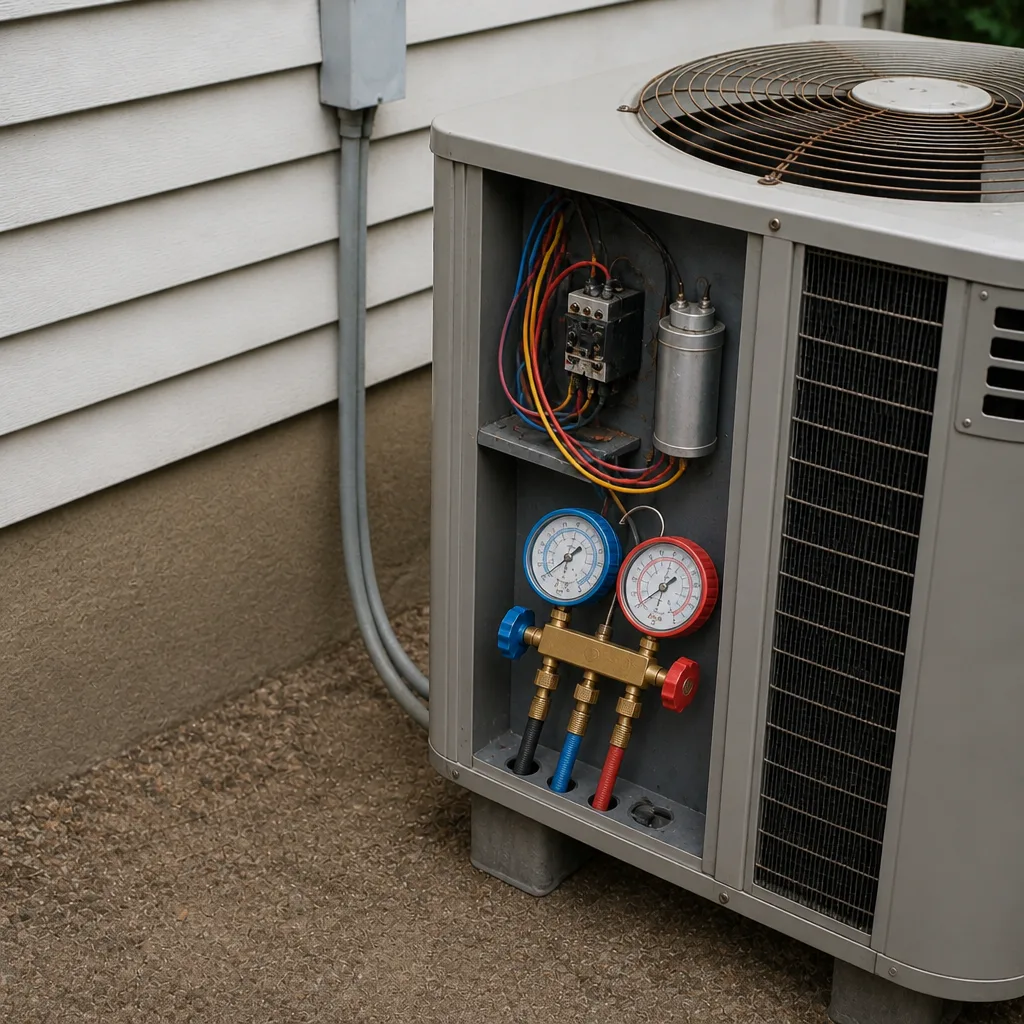
- Checking refrigerant pressures or subcool/superheat
- Testing or replacing capacitors without full isolation
- Replacing contactors, motors, or the compressor
- Adjusting or replacing the TXV or expansion valve
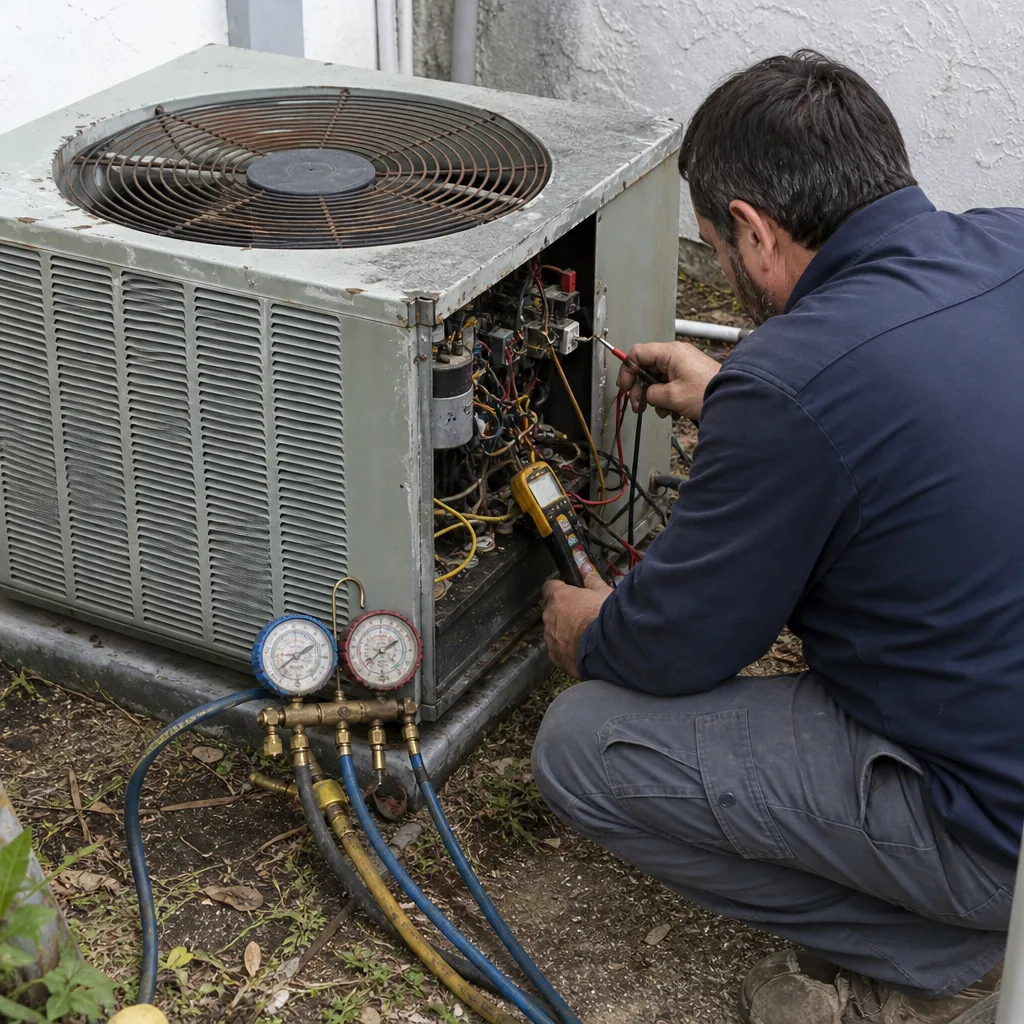
None of that list is meant condescendingly. These tasks require specialized tools (manifold gauges, a multimeter, a leak detector) and specific safety habits around energized equipment. Trying to learn them at home usually costs more than the repair would have.
Warranty Voiding: The Rule Most Homeowners Miss
Every residential HVAC manufacturer has warranty terms, and the ones on expensive parts like compressors and coils almost always require that service work be performed by a licensed technician. If you replace the capacitor yourself and the compressor fails two months later, the warranty claim becomes a conversation about why the capacitor work wasn’t done by a pro. Whether the manufacturer pushes back or not, it’s a bad position to be in.
Carrier, Trane, Lennox, American Standard – the major brands all handle this the same way. The equipment warranty is written around professional service. The work doesn’t just have to be done; it has to be done by someone licensed. That’s where having the right service record becomes the difference between a covered replacement and a paid one.
In Riverview, where systems get replaced on a roughly similar cycle because the cooling load is heavy all year, that coverage window matters. A 10-year parts warranty on a compressor is worth real money if you keep the paperwork in order.
If you’re not sure whether a repair will affect a current warranty, call and ask before you attempt it. Our furnace repair and cooling service records are written specifically so a manufacturer can’t come back and ask how the previous repair affected a downstream failure.
When YouTube Helps and When It Costs You Money
Watching a video before calling a professional is smart. Watching a video instead of calling a professional is often expensive. The line between those two depends on what the video is for.
When YouTube is a good preparation
- Learning what a capacitor, contactor, or blower motor does so you can describe your symptoms clearly
- Understanding how a system’s cooling cycle works so you can follow the technician’s explanation
- Learning to check for obvious signs of trouble like ice on the line set
- Finding your air handler, disconnect, and drain line so you know where they are
- Understanding what a 4-point inspection actually looks at
When YouTube misleads
- Diagnosing “why my AC isn’t cooling” – the same symptom points to at least six different causes
- Capacitor replacement without understanding how to isolate and discharge safely
- Anything involving refrigerant
- Adding refrigerant “just to top it off” – always wrong
- Replacing a compressor or contactor without knowing the electrical schematic
Here’s the pattern we see: a homeowner watches one video, decides the diagnosis is X, buys a part, replaces it, and the system still doesn’t work. Now the real problem has been sitting for a week longer than it should have, and in the Riverview summer heat, that extra week often turns a small repair into a compressor replacement. In our experience, the video that’s most useful is the one you watch before you pick up the phone, not the one you watch before you pick up a wrench.
The Misdiagnosis Problem
One of the most common calls we get in Riverview isn’t a simple repair request. It’s a homeowner who tried to fix it themselves, replaced two parts, and now needs someone to figure out what’s actually wrong. That’s fine, and we’re happy to sort it out. But it’s worth knowing why it happens so you can avoid it.
Same symptom, several causes
“The AC is running but not cooling” can mean: low refrigerant, a failed capacitor, a blocked condensate line (safety switch tripped), a dirty evaporator coil, a stuck contactor, a bad compressor, a failing thermostat, or a tripped high-pressure switch. Each of those has a different repair and a different price. A guess from a video will get it right one time out of seven at best.
What a trained diagnosis actually looks like
- Verify power at the disconnect and the panel
- Check filter condition and airflow
- Measure indoor and outdoor temperatures at the return and supply
- Check pressures and superheat/subcool if refrigerant work is warranted
- Test electrical components with a multimeter
- Inspect the coil and the condensate line
- Recommend a repair with a written price
Our technicians have up to 10 years of experience, and even they go through this sequence every time rather than skipping to a guess. It’s faster and cheaper than replacing parts one at a time.
Once you have a genuine diagnosis, the repair-replace decision becomes much easier. Our Riverview customers get a written estimate that spells out the repair and the honest replace option, so neither side of the decision is guesswork.
Common Mistakes to Avoid
- Recharging without fixing the leak. Refrigerant doesn’t wear out – it escapes. Adding more without finding the leak puts strain on the compressor and usually shortens its life.
- Opening the air handler cabinet to “check things.” The air handler contains energized components and the indoor coil. There’s nothing you need to look at in there. If you suspect a problem inside, that’s a call.
- Replacing a thermostat before checking the breaker and the float switch. Two of the most common “AC isn’t running” calls in Riverview are a tripped breaker and a condensate safety switch that’s done its job. Check those first.
- Buying a part based on a YouTube video without confirming the diagnosis. A capacitor, a contactor, and a blower motor all produce different symptoms, and guessing wrong means paying for a part you didn’t need.
- Assuming a DIY repair is fine because it “works.” A capacitor that’s the wrong microfarad rating, a contactor wired wrong, or a thermostat without the right wire mapping can run for a while and then cause a bigger failure.
- Skipping the filter. It’s the cheapest, most effective DIY HVAC task there is, and homeowners still forget it for months at a time. A clogged filter in a Riverview summer drives up energy use and shortens compressor life.
- Believing the system just needs a “tune-up.” If the system is running warm or short-cycling, it’s not a tune-up matter – it’s a diagnostic one. Filter changes and a hose rinse are maintenance; compressor and coil work are not.
See the difference
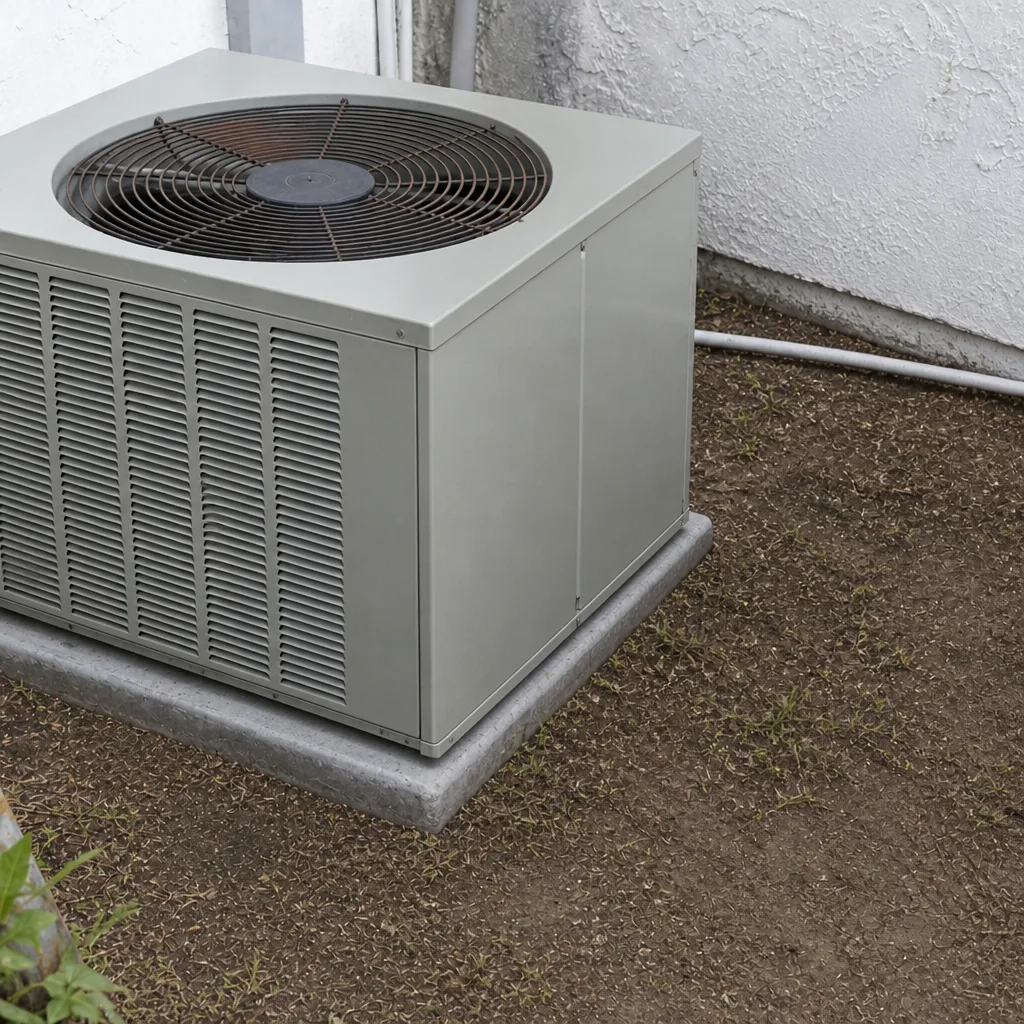
 Before
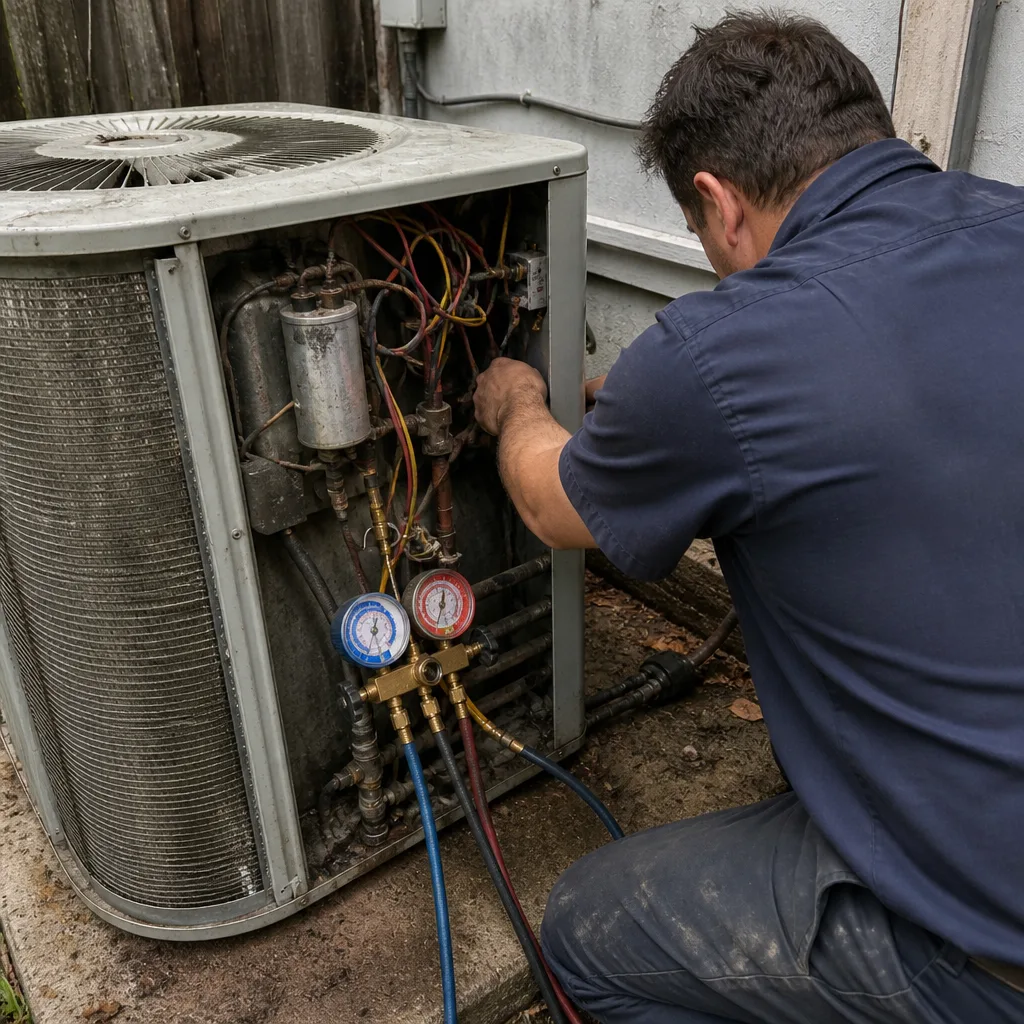
 After
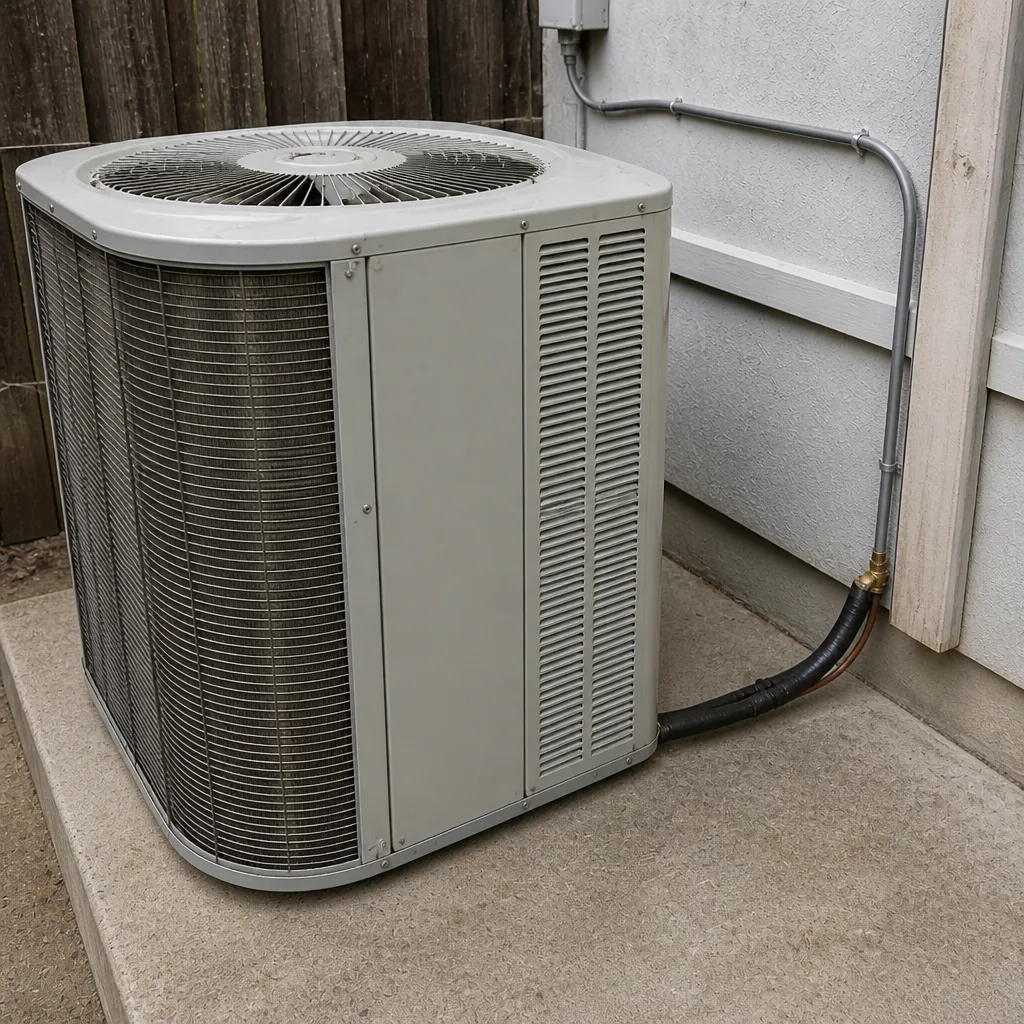
 Before
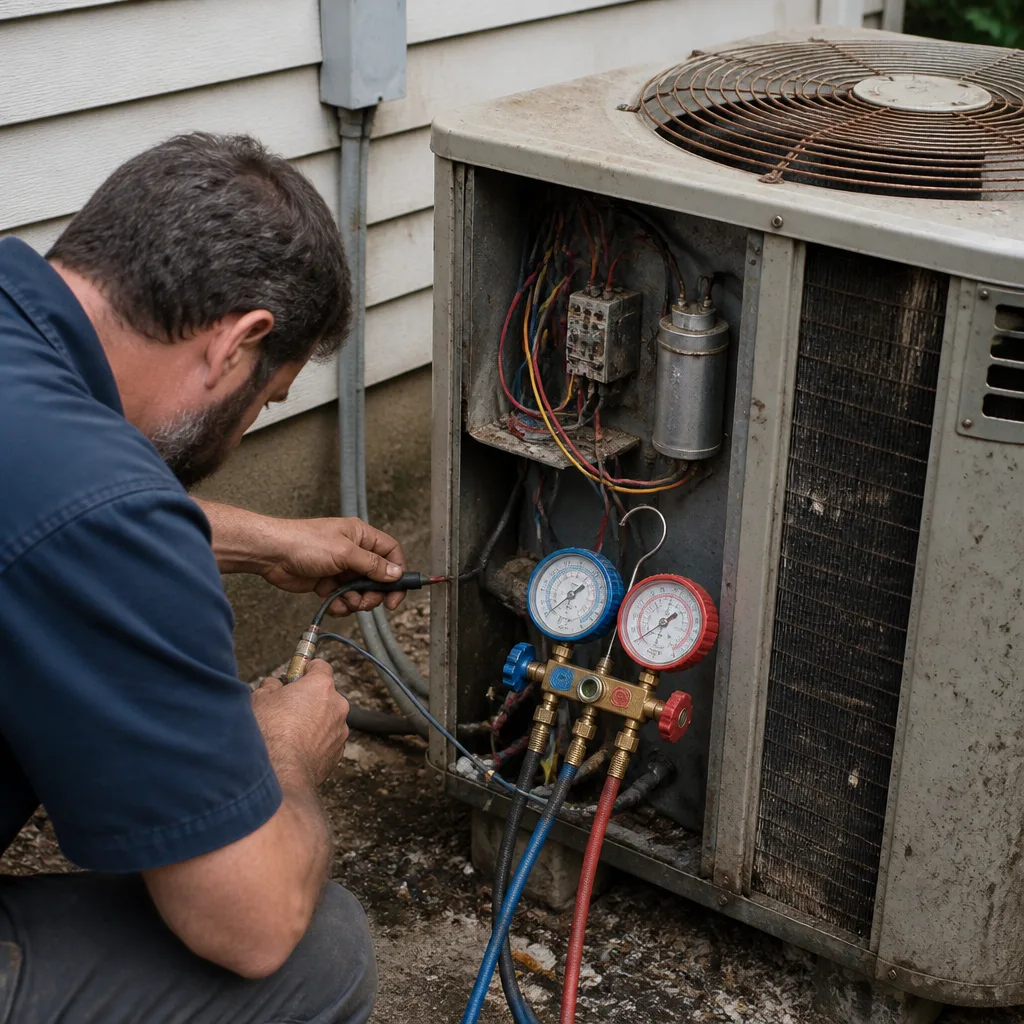
 After
 Before
 After
When to Call a Professional
Call for any task on the “licensed technician” list, and call any time you’re not sure. Specific situations that warrant a call: your system isn’t cooling or isn’t heating; refrigerant isn’t the issue but the compressor seems to be running hot; you see ice on the refrigerant lines; you hear a hard clicking or humming from the outdoor unit that stops with the breaker; you smell a burning or electrical odor; the air handler cabinet is buzzing; a furnace is working intermittently; you’ve replaced a part and the system still isn’t fixed; or you’re facing a 4-point inspection and want a documented service record. If the question is “should I try this myself?” the honest answer is usually that a free estimate is faster and cheaper than a wrong guess.
AC Repair Riverview offers free estimates in Riverview. Our technicians have up to 10 years of experience and work on virtually any brand you already own. Call (888) 465-9784. We answer 24/7. Fast dispatch, 7am-7pm, Sunday through Friday.
Frequently Asked Questions
No. Under EPA Section 608, only certified technicians can handle, recover, or charge refrigerant, and that includes R-410A. There’s no homeowner exception and no small-quantity carve-out. Call (888) 465-9784 for an exact quote – estimates are free.
It can. A 4-point inspection on an older Riverview home documents the HVAC system, and undocumented DIY work on electrical, refrigerant, or gas portions can complicate a later coverage review. Safe maintenance like filter changes is fine; anything touching the electrical or refrigerant side should be documented by a licensed professional.
It’s legal, but it’s genuinely dangerous if the power isn’t fully isolated and the capacitor isn’t discharged. The outdoor disconnect is separate from the main panel, and capacitors hold a charge even after power is off. That’s why we don’t give step-by-step instructions – the risk isn’t worth it when a professional can do it in minutes. Call for a free estimate.
Manufacturer warranties on major components like compressors and coils typically require that service work be done by a licensed technician. If a repair falls outside that, the affected warranty may be void. Whether you have a Carrier, Trane, Lennox, or American Standard system, the rule is usually the same. When in doubt, ask before you try the repair.
Change the filter, rinse the outdoor condenser coil with a garden hose, and flush the condensate drain line every few months. Those three tasks are the safe, genuinely useful DIY maintenance list. Anything that involves opening a cabinet, handling refrigerant, or working near energized electrical components is not. Call (888) 465-9784 if you’re unsure where a task falls.
Because the same symptom can come from at least six different causes: low refrigerant, a failed capacitor, a blocked drain, a dirty indoor coil, a stuck contactor, or a failing compressor. Each has a different repair and price, and a video diagnosis gets it right some of the time. A trained technician measures pressures and tests components in sequence to confirm the actual cause. Call (888) 465-9784 for an exact quote – estimates are free.
The Bottom Line
The DIY versus professional HVAC decision in Riverview isn’t really about skill level. It’s about which tasks are safe and legal, and which tasks expose you to federal rules, warranty exclusions, and insurance review. Filters, condensate lines, and outdoor coil rinses are yours to handle. Refrigerant, indoor cabinet work, and anything electrical belongs with a licensed professional. If a repair is on the “should I try this” list, get a free estimate before you start; it’s faster and cheaper than a misdiagnosis.
Call (888) 465-9784 for a free estimate. We answer 24/7. Fast dispatch, 7am-7pm, Sunday through Friday. We work on your brand, not ours – Carrier, Trane, Lennox, American Standard, and every other major system out there.
Written by the team at AC Repair Riverview.